A Practical, Repeatable Wildfire Simulation for Evaluating Utility Pole Fire Protection Systems
Utility Poles and Wildfire Risk
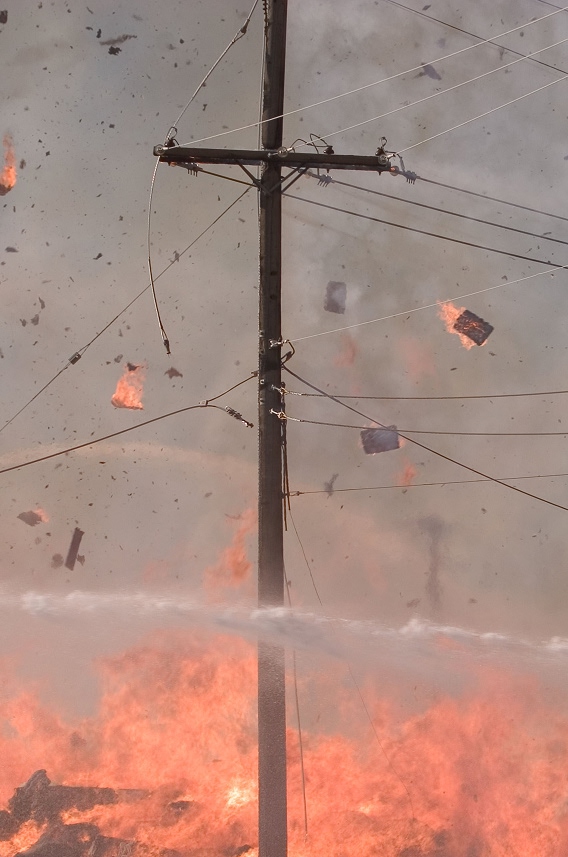
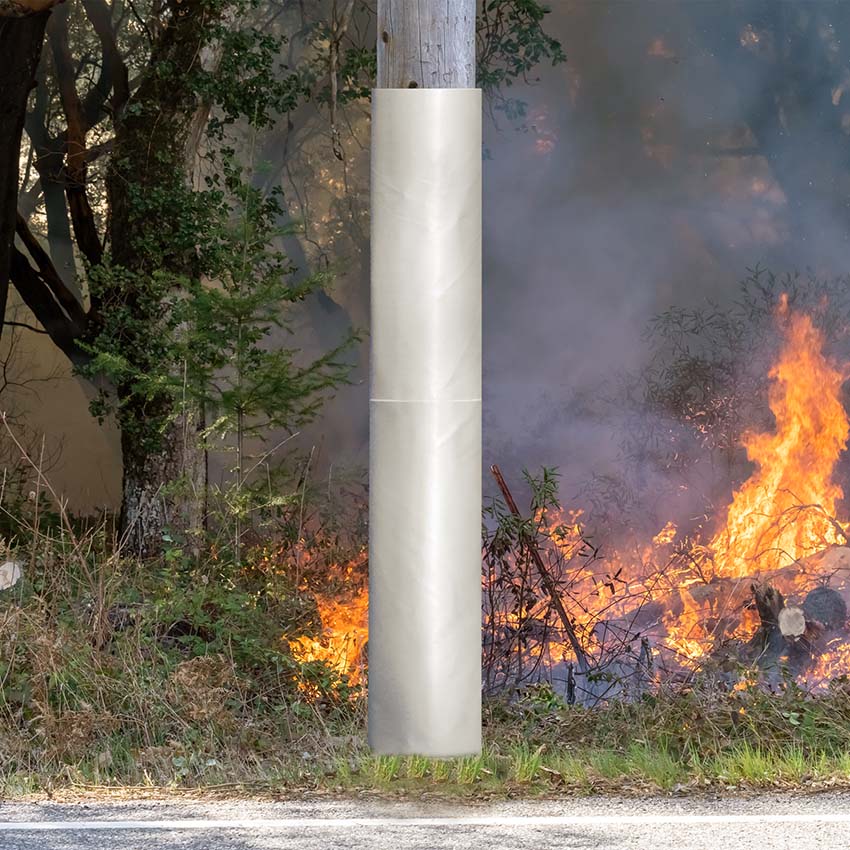
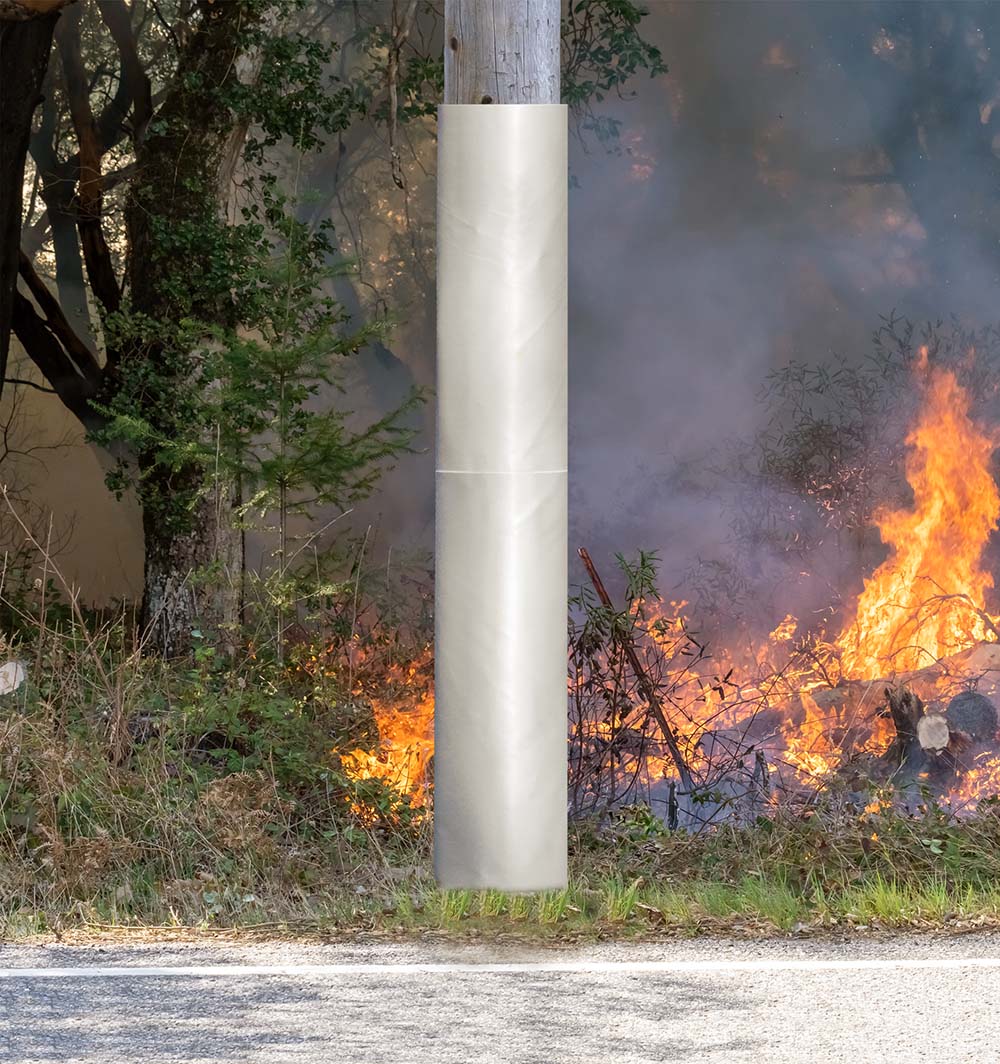
As wildfire frequency and severity continue to increase globally, utilities face growing challenges in protecting critical infrastructure. Wooden utility poles are particularly vulnerable to heat damage, charring, and structural weakening during wildfire events, leading to costly pole replacements, unplanned service interruptions, and increased operational risk.
As a result, utilities are investing heavily in wildfire mitigation programs and evaluating protection systems, fire barriers, and wildfire resistant utility poles. Reliable fire testing methods are becoming increasingly important to help utilities assess fire protection performance, improve network resilience, and make informed decisions on infrastructure hardening in wildfire-prone regions.
Watch the Utility Pole Fire Barrier Test in Action
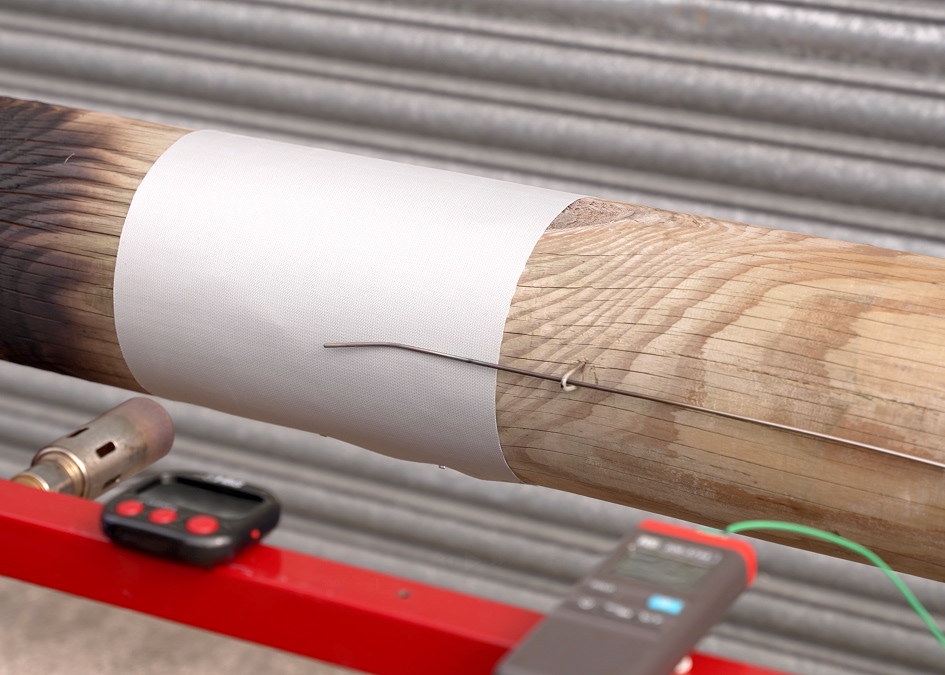
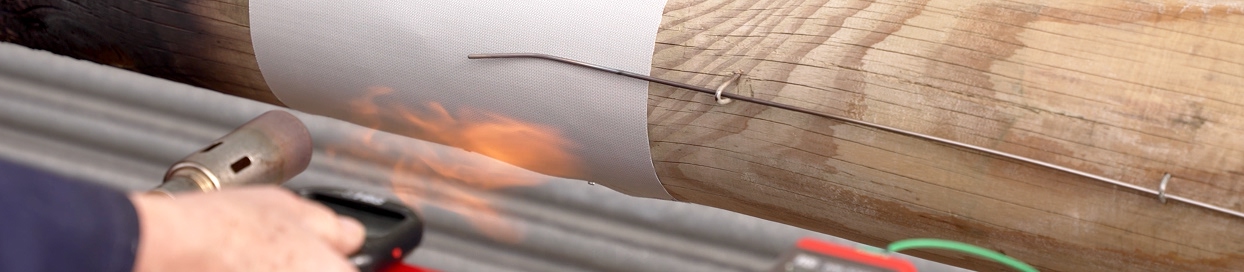
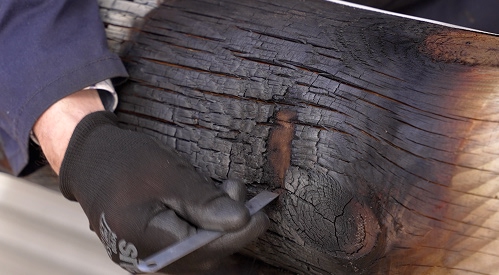
This demonstration shows the new wildfire simulation methodology being applied to a preservative-treated utility pole protected with a Polesaver Blaze-Guard fire barrier.
Why this Test Method Matters
Current utility pole fire testing methods suffer from one or more limitations:
Method
Bale Tests
Building Fire Standards
Building Fire Standards
Large Scale Laboratory Tests
Advantages
Low Cost
Controlled
Controlled
Repeatable
Limitations
Poor Repeatability
Not representative of wildfire conditions
Expensive and difficult to access
This new methodology was developed to provide
Realistic wildfire exposure
Practical evaluation tool
Repeatable results
Low-cost implementation
Quantifiable residual strength assessment
Based on Real Wildfire Behaviour
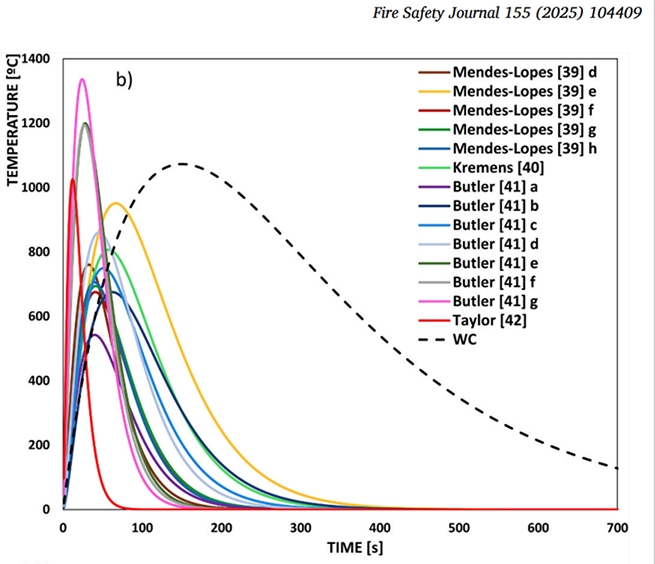
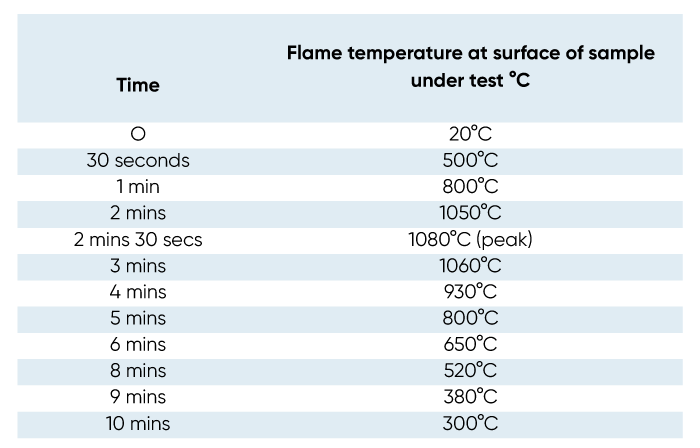
This methodology is based on published wildfire research and is designed to replicate the conditions experienced by utility poles during real wildfire events. The test profile follows the Butler Wildfire Curve, which is derived from high-intensity wildfire and crown fire data, providing a realistic representation of the temperatures and heat exposure encountered in the field.
Unlike constant-temperature fire tests, the method replicates the full time-temperature relationship of a wildfire, including both the heating and cooling phases. It also considers thermal mass effects, which influence how heat is absorbed and retained within a wooden pole. By combining realistic wildfire temperatures, exposure duration, and heat transfer characteristics, the method provides a practical and repeatable approach to wooden utility pole fire testing and the evaluation of pole wildfire protection systems.
Wildfire Time-Temperature Curve
Butler wildfire curve showing representative wildfire temperatures experienced by utility poles during high-intensity forest fire exposure.
Test Method Overview
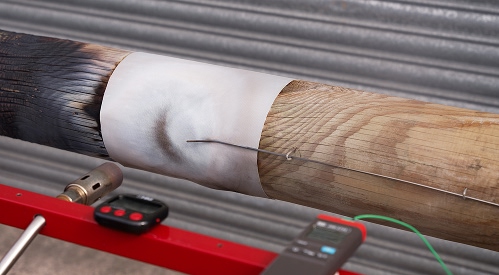
This methodology assesses the ability of the Polesaver Blaze-Guard fire barrier to protect wooden utility poles under simulated wildfire conditions
WHAT THIS TEST MEASURES
Remaining Pole Circumference
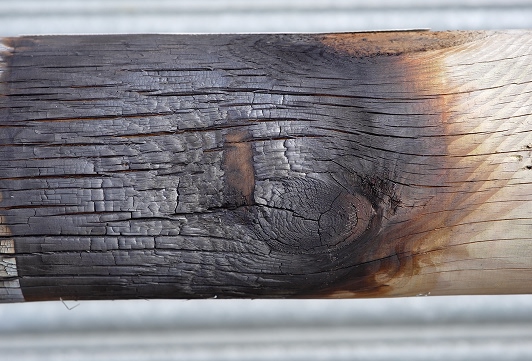
Char Depth
Estimated Residual Strength Value (RSV)
Barrier Condition, Post Test
FULL TEST PROCEDURE
Equipment Required:
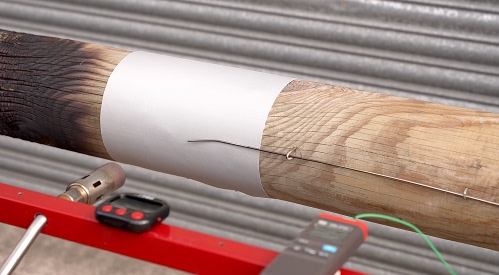
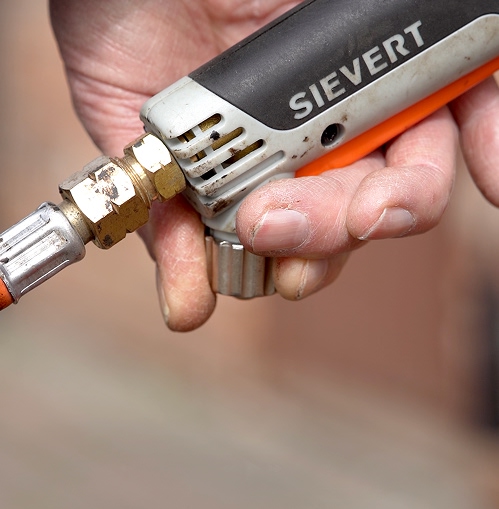
Blow torch, Thermocouple, Moisture meter, Measuring equipment, PPE
1. Set-up the fire protected sample (full set up instructions included test method download)
2. Ensure the blow torch is correctly aligned with the centre of the pole both circumferentially and length ways, and ignite
3. Using the defined time–temperature profile (below), adjust the heat output to reach the required surface temperature, and start the timer.
4. At the end of the test, turn off the torch and allow the sample to cool naturally
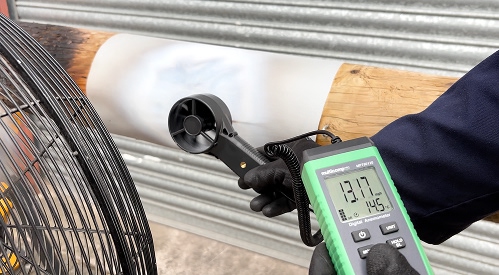
• For copper-treated poles, a fan may be introduced immediately after fire exposure to simulate wind and assess afterglow behaviour over time until burning/smoke stops or the pole is destroyed.
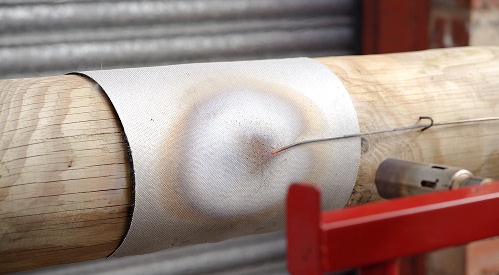
5. Record the condition of the fire protection system (photographs recommended)
6. Remove any remaining protective layer and char material before measuring char depth.
Residual Strength Value (RSV)
Char depth can be used to determine the remaining pole circumference and estimate structural performance. The indicative remaining or residual Strength Value (RSV) is calculated as:
This provides an indicative measure of retained structural capacity following fire exposure. The test should be repeated to ensure that consistent results are achieved.
BLAZE-GUARD TEST RESULTS
Metric
Original Circumference
Char Depth
Remaining Circumference
Residual Strength Value
Barrier Inspection
Result
943 mm
943 mm
5 mm
911 mm
911 mm
90%
90%
Barrier remained intact
Key Observations
Barrier remained intact
Smoke ceased after approximately 2 minutes
No significant post-exposure degradation observed
Evaluate Fire Protection Systems Using a Repeatable Wildfire Test
Whether you are assessing wildfire mitigation options, comparing fire barrier technologies, or developing grid hardening strategies, this methodology provides a practical framework for consistent performance evaluation.
Traditional bale tests using hay or straw are simple and low-cost but can be highly variable due to differences in fuel type, moisture content, weather conditions, and fire behaviour. This methodology uses a controlled heat source and a defined time-temperature profile based on wildfire research, providing greater repeatability and allowing more reliable comparison between fire protection systems.
What wildfire temperatures are simulated?
The test methodology presented follows a wildfire time-temperature curve derived from published research on high-intensity wildfire and crown fire behaviour. Temperatures rise from ambient conditions to a peak of approximately 1080°C (1975°F) before gradually reducing, closely reflecting the thermal exposure experienced by utility poles during severe wildfire events.
How is residual strength calculated after the fire test?
Residual Strength Value (RSV) is estimated by measuring the char depth created during testing and calculating the remaining pole circumference after the charred material has been removed. This provides an indication of the structural capacity retained by the pole following wildfire exposure and allows direct comparison between different fire protection systems.
Can utilities perform the test themselves?
Yes. One of the key objectives of the methodology is to provide a practical, low-cost test that can be carried out by utilities, research organisations, manufacturers, or independent laboratories using readily available equipment and without the need for specialised large-scale fire testing facilities.
Does the method simulate wind?
The primary test is conducted in still-air conditions to ensure accurate temperature control and repeatable results. However, an optional post-fire airflow assessment can be performed using a fan to simulate wind effects and evaluate afterglow behaviour, smouldering, and material integrity following flame exposure.
Can different fire barrier systems be compared?
Yes. The methodology has been specifically designed as a comparative evaluation tool. Because each system is exposed to the same controlled wildfire temperature profile, utilities can directly compare performance using measurable outcomes such as char depth, residual strength value (RSV), barrier condition, and afterglow behaviour.
Is the method suitable for transmission and distribution poles?
Yes. The methodology can be applied to both transmission and distribution pole types, provided that representative pole sections are used for testing. Utilities can specify the pole material, preservative treatment, dimensions, and fire protection system to ensure the test reflects their specific infrastructure requirements.
Used & Trusted By
Connect With Us
To learn more about how Blaze-Guard can benefit your utility get in touch with us today
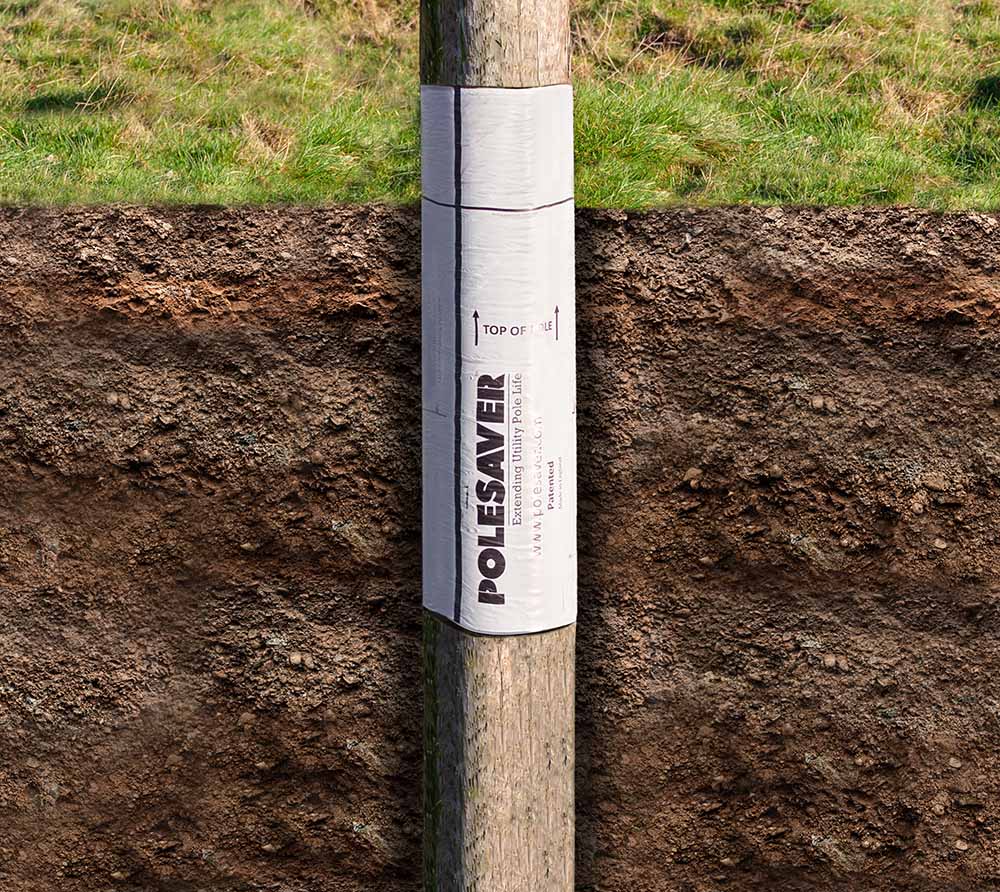
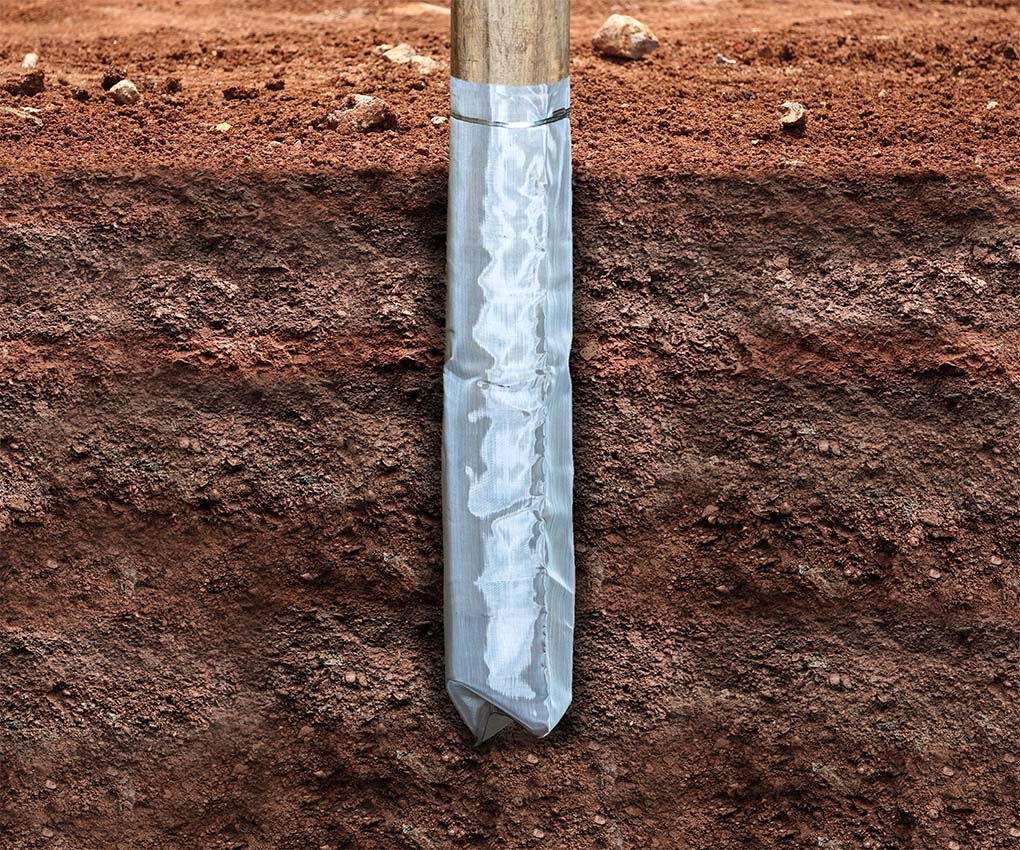
Polesaver manufactures and supplies guaranteed products that are proven to maximise utility pole lifespan. With millions of Rot-Guard sleeves supplied to date, our patented ground-line barrier sleeves have been proven in volume use since 1994.
*Polesaver uses long term independent test data on the effectiveness of barrier sleeves and fire protection fabric to reach all the conclusions given on this website (test data available on request). Based on this data, Polesaver believes longer life, maintenance of strength over time, improved safety and reliability, extended inspection periods and reduced maintenance requirements are reasonable claims. This is subject to Polesaver products being correctly applied as per our instructions and used on correctly preservative treated (for long term in-ground use - Use Class 4 or higher) wooden utility poles that are free of decay at the time of sleeve application. The claims made, real or implied are not warranties. It is the responsibility of the user to evaluate and satisfy themselves that the performance of the product meets their specific safety, reliability, extended inspection, repair and any other performance or cost-benefit criteria before using Polesaver sleeves or fire protection fabric.