For years, the utility industry's response to grid hardening has been straightforward: build stronger infrastructure.
That approach has driven demand for larger conductors, stronger structures and oversize wooden utility poles that retain a minimum strength for longer.
But as utilities continue investing in grid hardening programs, pole producers may need to ask a difficult question: Can the industry continue supplying the poles utilities are specifying?
Across North America, utilities are building their networks to withstand higher loads, more severe weather events and growing electrification demands. To achieve those objectives, many are specifying pole classes that exceed initial strength requirements so that the poles will comply with National Electrical Safety Code (NESC) requirements and ANSI O5.1 standards for the whole of their planned service life.
The challenge is that larger poles require larger trees. And larger trees are becoming increasingly difficult to source.

Unlike manufactured materials, utility poles cannot be produced on demand.
The larger the pole class, the larger the tree required. Those trees may take decades to reach harvestable size.
As utilities continue specifying larger poles for resilience projects, producers are facing a growing supply challenge. Demand can increase rapidly, but timber resources cannot necessarily meet demand.
Utilities still have projects to complete. They still have reliability targets to meet. If the required wood poles are unavailable, they begin evaluating alternatives.
That should concern every pole producer.
Composite, steel, ductile iron and concrete pole manufacturers have spent years positioning their products as solutions for utility resilience.
Historically, wood maintained a significant advantage in cost and utility acceptance.
Today, however, utilities are increasingly evaluating alternative materials for applications where resilience, longevity and availability are critical considerations.
Composite pole deployments continue to expand across North America. Utilities facing severe weather risks are using alternative materials in hardening projects designed to improve network reliability and reduce restoration times.
At the same time, manufacturers of composite poles are increasing production capacity in response to growing utility demand.
Wood still remains the dominant utility pole material, accounting for more than 63% of the global market according to Fortune Business Insights. However, the same report identifies continued growth in alternative pole materials as utilities seek longer-lasting infrastructure solutions.
The risk to wood is not immediate replacement. The risk is gradual specification change. Every project that shifts from wood to steel, concrete or composite creates another opportunity for utilities to become comfortable with alternatives.
The industry's response to resilience has largely focused on structural performance. But this does not address the leading cause of premature wood pole failure. Ground-line decay continues to remove poles from service long before their structural capacity is fully utilised.
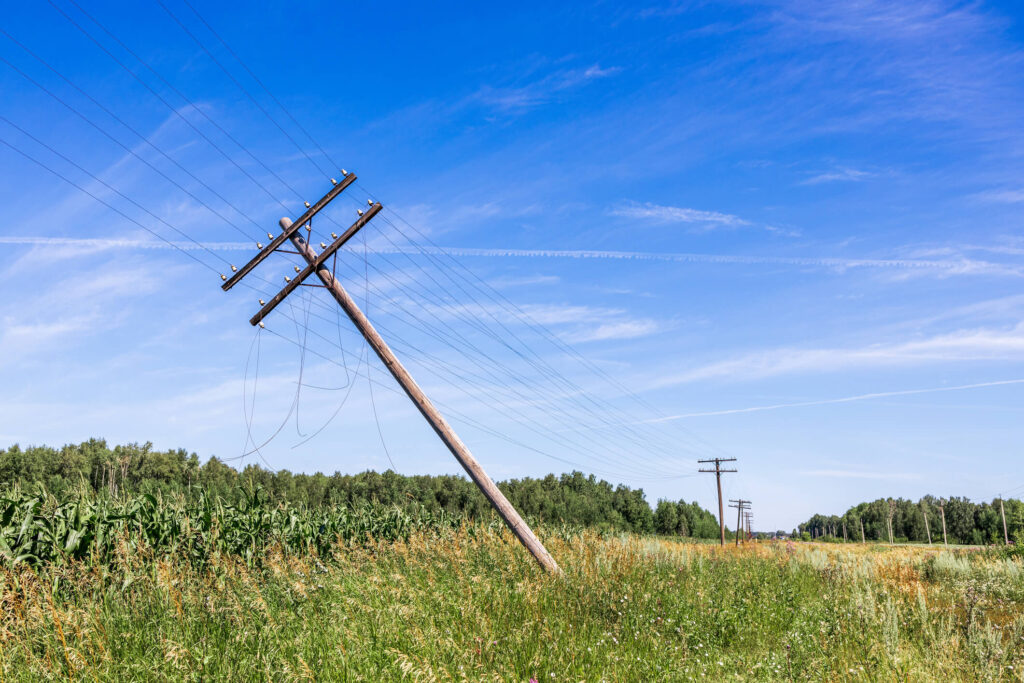
If utilities are seeking longer service life and maintained strength, it makes sense to ask whether increasing pole size alone is the most effective solution. A larger pole that eventually fails because of ground-line decay still has the same fundamental problem as a smaller pole.
Perhaps the industry's focus should shift from simply supplying larger poles to helping utilities get more life from the poles they already buy.
One approach is ground-line protection.
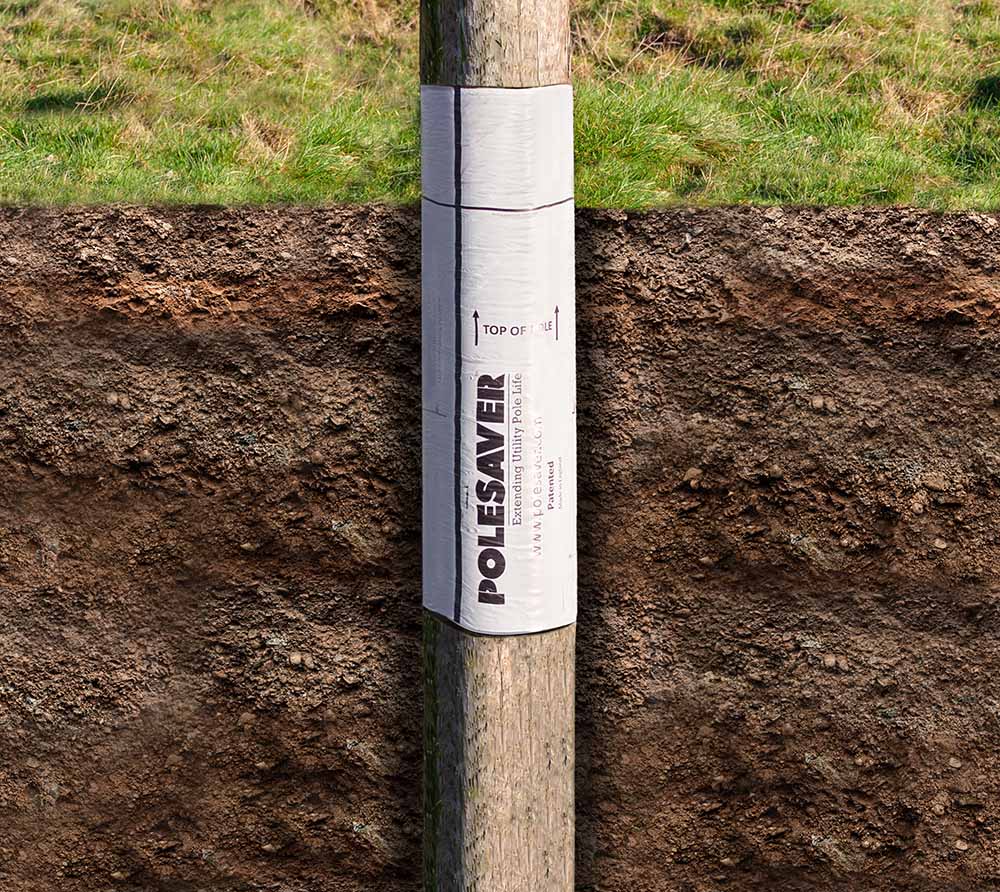
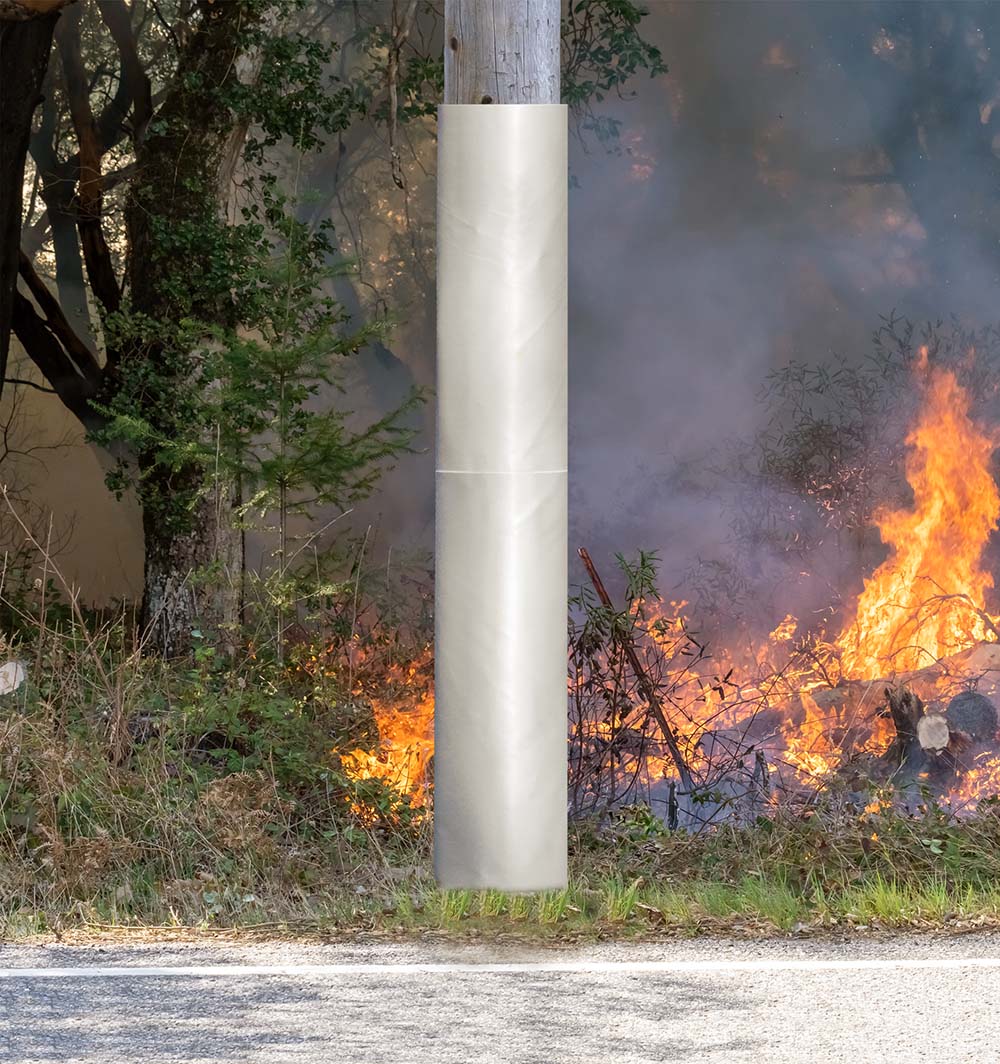
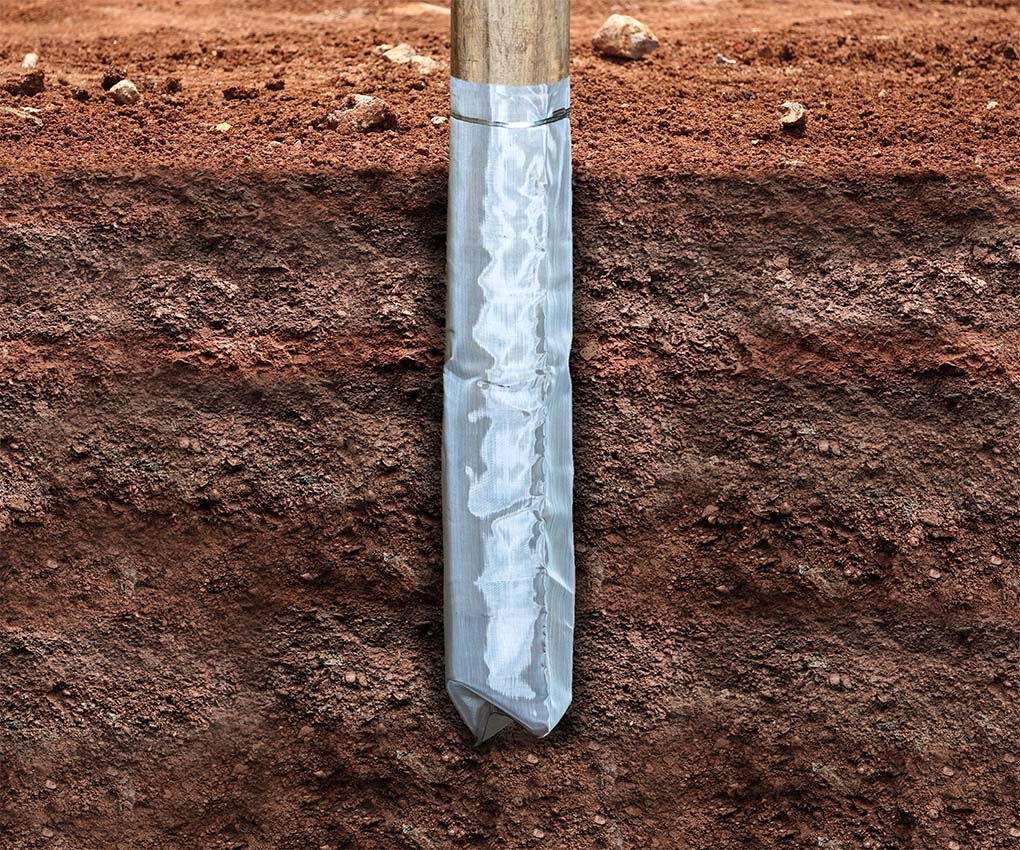
The unique proven and tested Polesaver Rot-Guard system uses a dual-layer barrier to lock preservatives into the critical ground-line zone while preventing moisture ingress and fungal attack. By addressing the primary causes of decay, the system has been proven to add 20 years to pole service life whilst maintaining pole strength over time.
For utilities, that creates another pathway toward resilience. Rather than unnecessarily increasing pole size or moving to alternative materials, they can continue to specify their current classes of wood utility poles with the addition of a barrier sleeve.
For producers, the implications are equally important. The industry cannot control how quickly trees grow nor can it eliminate supply constraints for oversized poles. What it can do is help utilities maximise the value, performance and lifespan of every pole installed to help secure the future of wood as the material of choice.
Wood remains the most sustainable, economical and widely accepted utility pole material available.
But the market is changing.
Utilities are under pressure to improve reliability, strengthen infrastructure and justify long-term investment decisions. Every material choice is increasingly evaluated on lifecycle performance as much as initial cost.
If pole producers want wood to remain the preferred material for future grid construction, they must demonstrate that wood can deliver not only structural performance but also long-term resilience. That may require a shift in thinking.
The future of the wood pole industry may depend less on supplying larger poles and more on ensuring those poles last longer. Because, if utilities believe alternative materials offer a better answer to the resilience challenge, they will not wait for the timber supply chain to catch up.
Sources
Fortune Business Insights, Utility Poles Market (2025–2034)
National Electrical Safety Code (NESC)
ANSI O5.1 Specifications and Dimensions for Wood Poles
North American utility grid-hardening and resilience programs
International Code Council (ICC) approval documentation for Polesaver Rot-Guard
For detailed test reports, full code approval documentation and a full product introduction, get in touch with the Polesaver team.


This site is protected by reCAPTCHA and the Google Privacy Policy and Terms of Service apply.