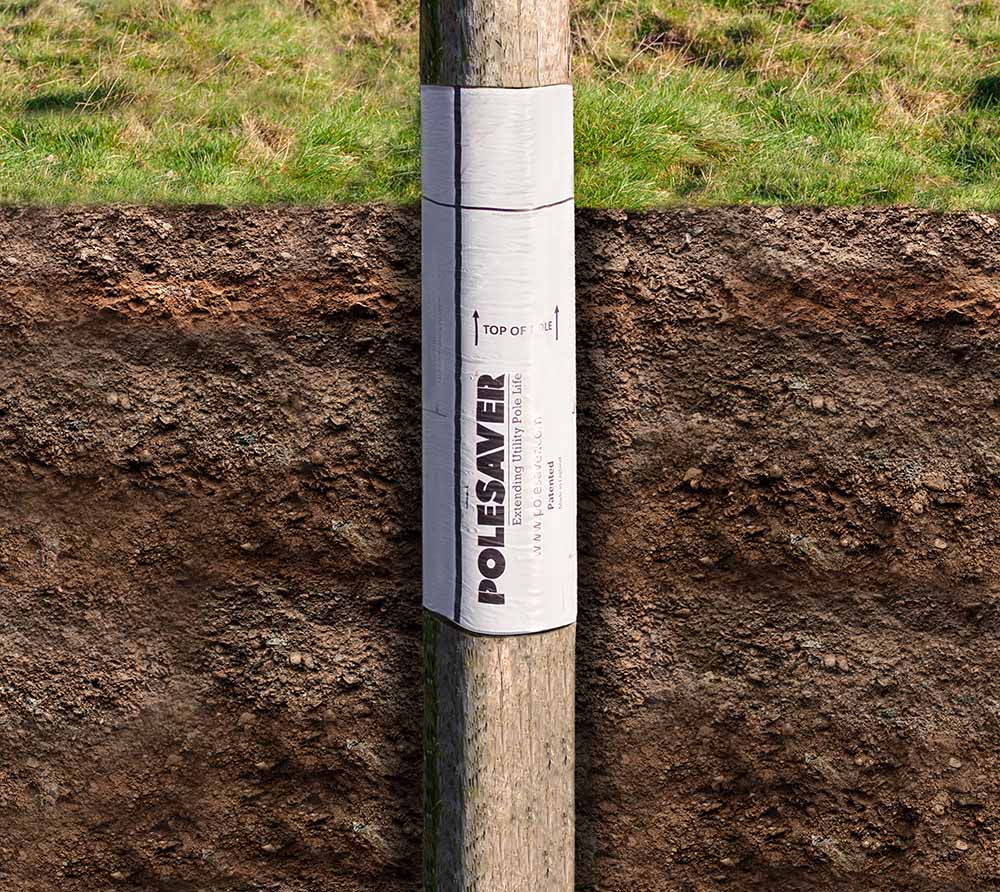
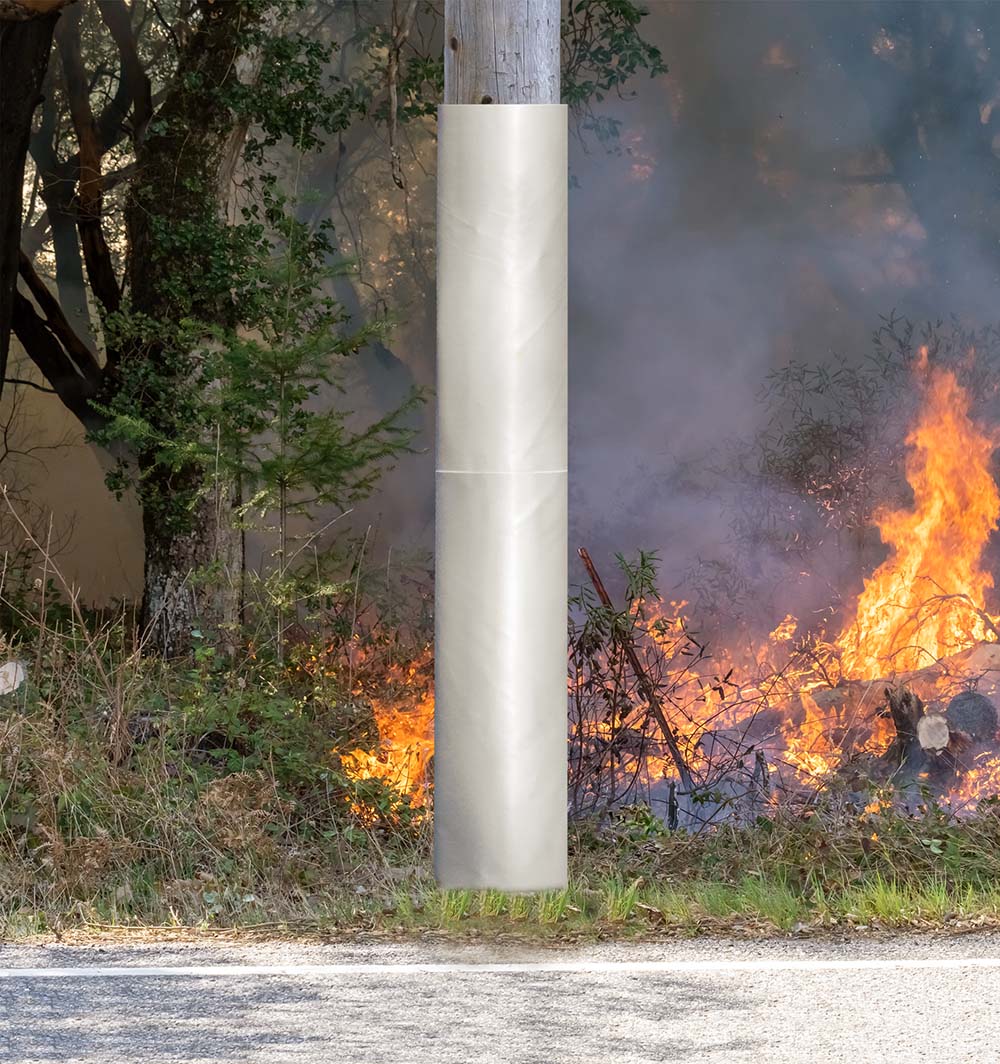
For decades, utilities and network operators have used treated timber poles to support their overhead lines because wood combines strength, flexibility, and availability with relatively low whole-life cost. But even a properly treated wooden pole has a vulnerable point: the ground line, where moisture, oxygen, microorganisms and insects can gradually compromise the timber.
So if the problem is well understood, why aren't ground line barrier sleeves universally adopted? Perhaps part of the answer lies in the fact that the term “barrier sleeve” covers a range of different systems. Understanding how those systems differ, and what makes an effective barrier, is key to unlocking the technology’s potential. But utilities are also facing a wider choice of pole materials, from concrete and steel to composites.
Environmentally, wood remains the most attractive option for utilities looking to manage carbon as well as cost. Replacing a timber pole with a more carbon-intensive alternative isn't necessarily an improvement if the existing pole could have included a design feature to maximise its service life.
With utilities under growing pressure to deliver against ESG and sustainability targets, maximising the life of new timber assets could therefore become part of the solution, reducing replacement cycles and hardening the grid.
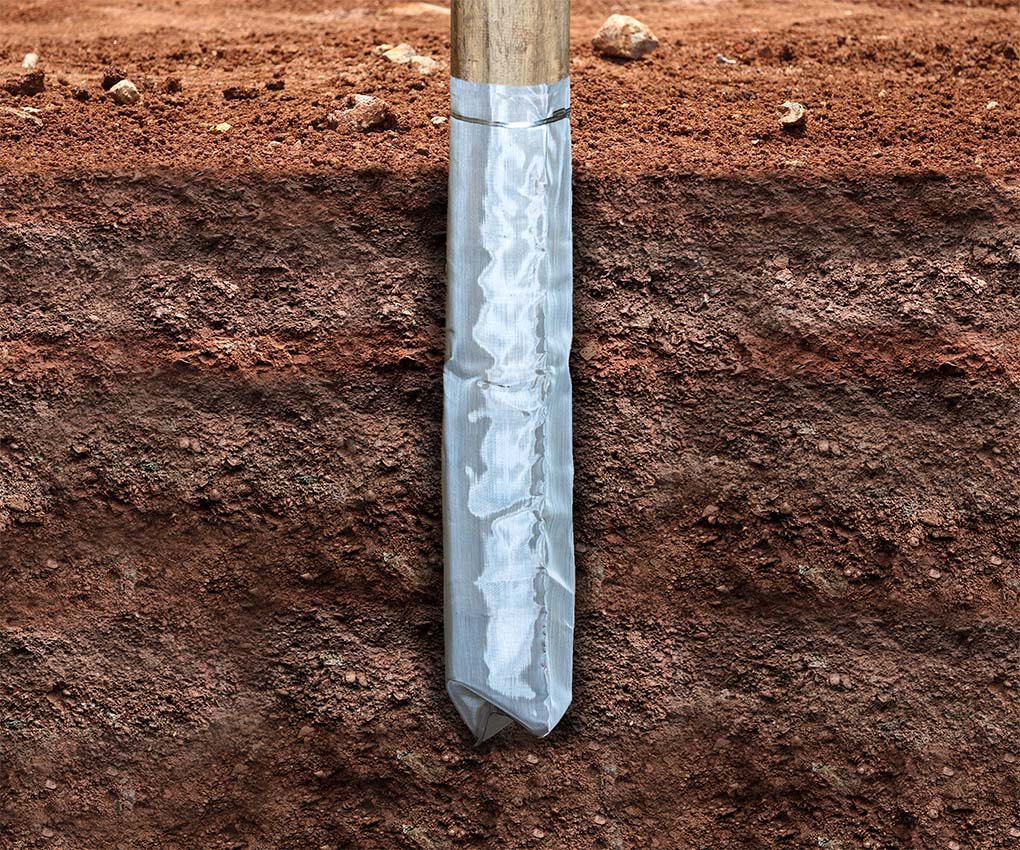
Barrier systems comprising bags, tapes, adhesive and wrapped plastic sheets that simply cover the pole are known as partial barrier products. Total barrier products seal the critical ground-line section by bonding to the surface of the pole, creating an impenetrable barrier against moisture ingress and fungal penetration. That distinction matters because the objective isn't simply to cover the pole it is to prevent moisture from penetrating the timber surface in the first place.
Polesaver's product-development history illustrates the issue. The company tested partial and total barrier approaches before rejecting the partial barrier system because of continued wet-band decay at the top of the sleeve. The Rot-Guard full barrier system in service today uses a dual-layer construction, with an inner meltable sealant bonding to the timber and an outer thermoplastic layer shrinking tightly around the pole. The result is a permanent air and watertight seal.
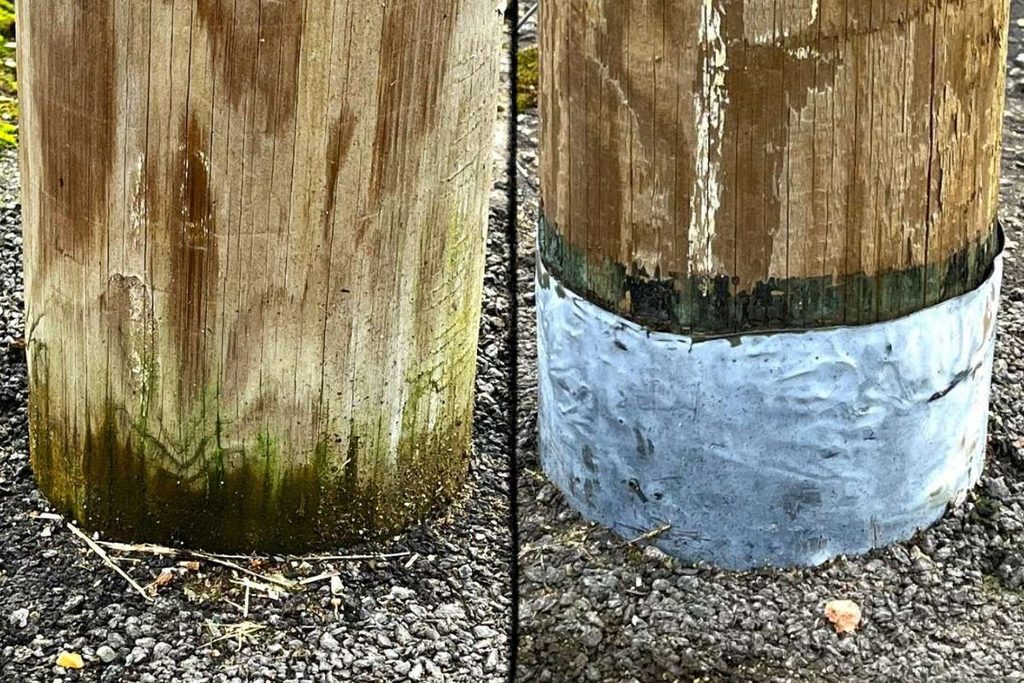
After four years on test, the average moisture content measured immediately above the barrier was 43% for poles fitted with a partial bag-type barrier, compared with 20% for poles fitted with Polesaver’s Rot-Guard total barrier. Water-based copper-treated poles without a barrier were reported at 32%.
Moisture content is critical because timber becomes increasingly susceptible to fungal decay as moisture levels rise, with around 25% generally regarded as the practical threshold range for decay risk.
A pole that fails early creates costs far in excess of a planned replacement - labour, equipment, access, traffic management, remedial work, outage, and customer disruption. However, maximising the service life of a new timber pole from the start can defer replacement costs dramatically improving the return on investment of each newly installed pole.
That doesn't mean timber is automatically the right choice for every pole in every situation. Concrete, steel and composite poles all have applications where their particular characteristics make them attractive. But if utilities are assessing materials through the increasingly important lenses of carbon, whole-life cost and ESG performance, the ability to maximise the life of timber deserves consideration alongside the alternatives. Determining which material is the most sustainable and cost-effective way to deliver the required service life is critical.
The strongest case for barrier technology is made not by laboratory testing, but in the field where utilities have integrated it into their networks.
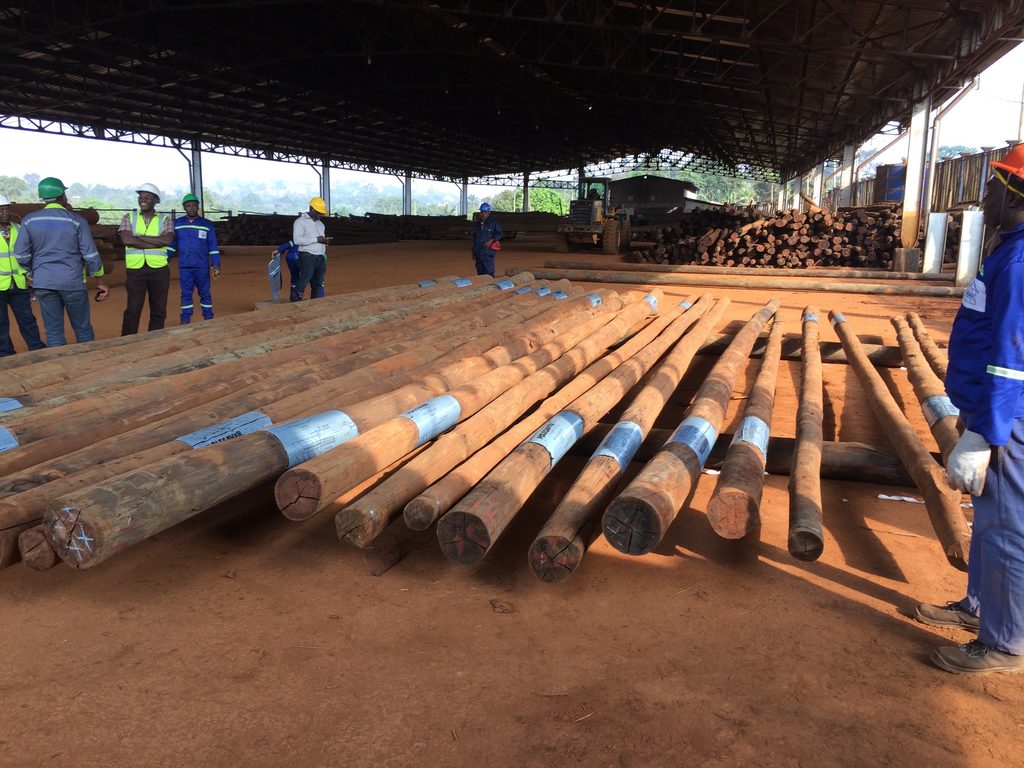
In Cameroon, the electricity utility ENEO faced severe ground-line decay and termite problems, with Eucalyptus poles reportedly lasting just six to eight years and around 60,000 poles being replaced annually. Following the introduction of Rot-Guard, more than one million sleeves have been installed on new poles, giving an additional 20 years’ service life to every pole and, according to Polesaver, generating approximately $12 million in annual cost savings.
In northern Finland, Rovakaira contends with temperatures as low as −51°C, heavy snow and severe Arctic conditions. The utility assessed barrier options against criteria including moisture exclusion, environmental suitability, ease of installation, robustness, and performance in stony ground. Rot-Guard was the only option to meet all the criteria, with more than 10,000 poles subsequently protected by their total barrier sleeves.
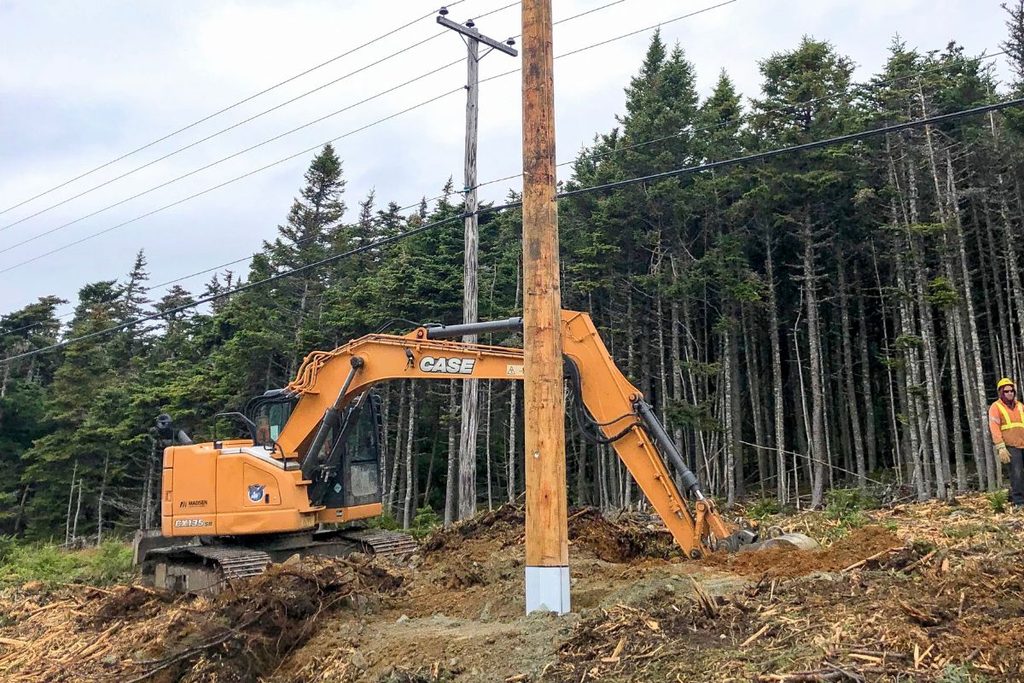
In Newfoundland, the challenge was environmental rather than climatic. At the Windsor Lake water catchment, concerns about pole preservative leaching in to the groundwater meant untreated Western Red Cedar poles were used with an expected life of only around eight years because of ground-line decay. The addition of Rot-Guard total barrier sleeves to the poles extends that expected service life to approximately 28 years.
These case studies showcase different climates, operating conditions and a range of reasons for requiring an effective ground line barrier system. However, the underlying principle is the same, if the ground-line section is protected, the life of the asset can be extended.
With a vast range of products on the market and a rise in alternative materials, it’s likely that utilities are overwhelmed with choice and the simplicity of an effective barrier system may seem be too good to be true. It may also be that partial barriers have been trialled by utilities and dismissed because of early failure concerns. That makes the quality of the comparison more important than ever.
For utilities investigating ground-line barrier protection, the key questions to ask are:
Ultimately, the value of a ground-line barrier comes down to one thing: effective protection where a timber pole is most vulnerable. A barrier that is properly designed, fully seals the pole surface and is supported by real-world evidence will maximise pole life, reduce premature replacement and lower whole-life costs. And, as utilities look more closely at the carbon impact of their assets and their ESG targets, those benefits become increasingly significant.
The question, then, isn't simply whether barrier sleeves work. It's whether the barrier provides the level of protection the pole actually needs, and the evidence to prove it.
Get in touch to find out more about Polesaver Rot-Guards, or to request test data and product samples.




This site is protected by reCAPTCHA and the Google Privacy Policy and Terms of Service apply.